
















Cryptocurrencies all
In January 2024 the SEC approved 11 exchange traded funds to invest in Bitcoin. There were already a number of Bitcoin ETFs available in other countries, but this change allowed them to be available to retail investors in the United States https://ritzycruises.com/minimum-deposit-casinos/10depositcasino/. This opens the way for a much wider range of investors to be able to add some exposure to cryptocurrency in their portfolios.
The total crypto market volume over the last 24 hours is $172.65B, which makes a 34.94% increase. The total volume in DeFi is currently $27.22B, 15.77% of the total crypto market 24-hour volume. The volume of all stable coins is now $161.34B, which is 93.45% of the total crypto market 24-hour volume.
NFTs are multi-use images that are stored on a blockchain. They can be used as art, a way to share QR codes, ticketing and many more things. The first breakout use was for art, with projects like CryptoPunks and Bored Ape Yacht Club gaining large followings. We also list all of the top NFT collections available, including the related NFT coins and tokens.. We collect latest sale and transaction data, plus upcoming NFT collection launches onchain. NFTs are a new and innovative part of the crypto ecosystem that have the potential to change and update many business models for the Web 3 world.
The market cap of bitcoin and other major cryptocurrenciesare are listed below from largest market capitalization to smallest. Cryptocurrencies are also known as coins or virtual currency. The value of bitcoin is growing with time and is the largest currency by market cap currently. The currency data below is updated once every five minutes with the latest market cap data. Exchange rates for the currencies are shown in U.S. dollars. New coins are being brought to market via initial coin offerings frequently so expect the list of cryptocurrencies below to grow.
The very first cryptocurrency was Bitcoin. Since it is open source, it is possible for other people to use the majority of the code, make a few changes and then launch their own separate currency. Many people have done exactly this. Some of these coins are very similar to Bitcoin, with just one or two amended features (such as Litecoin), while others are very different, with varying models of security, issuance and governance. However, they all share the same moniker — every coin issued after Bitcoin is considered to be an altcoin.
All the cryptocurrencies
The UK’s Financial Conduct Authority estimated there were over 20,000 different cryptocurrencies by the start of 2023, although many of these were no longer traded and would never grow to a significant size.
These crypto coins have their own blockchains which use proof of work mining or proof of stake in some form. They are listed with the largest coin by market capitalization first and then in descending order. To reorder the list, just click on one of the column headers, for example, 7d, and the list will be reordered to show the highest or lowest coins first.
Related Links Are you ready to learn more? Visit our glossary and crypto learning center. Are you interested in the scope of crypto assets? Investigate our list of cryptocurrency categories. Are you interested in knowing which the hottest dex pairs are currently?

The UK’s Financial Conduct Authority estimated there were over 20,000 different cryptocurrencies by the start of 2023, although many of these were no longer traded and would never grow to a significant size.
These crypto coins have their own blockchains which use proof of work mining or proof of stake in some form. They are listed with the largest coin by market capitalization first and then in descending order. To reorder the list, just click on one of the column headers, for example, 7d, and the list will be reordered to show the highest or lowest coins first.
Do all cryptocurrencies use blockchain
Each entry on the blockchain is called a “block.” These blocks are linked together to form a “chain.” Once a block is added to the chain, it cannot be altered or deleted without changing every subsequent block, making the entire chain highly secure. Blockchain is often described as “immutable,” meaning the data cannot be modified once it’s recorded.
Many blockchain networks operate as public databases, meaning anyone with an internet connection can view a list of the network’s transaction history. Although users can access transaction details, they cannot access identifying information about the users making those transactions. It is a common misperception that blockchain networks like Bitcoin are fully anonymous; they are actually pseudonymous because there is a viewable address that can be associated with a user if the information gets out.
Some see DAGs as an alternative that combats the shortcomings of blockchain technology, but it would be false to claim that one technology is better than the other. In the world of cryptocurrency, people often try to build hype around the technology they invested in. This leads to the creation of buzzwords like “blockchain killer,” meant to portray DAGs as technologically superior to blockchain.
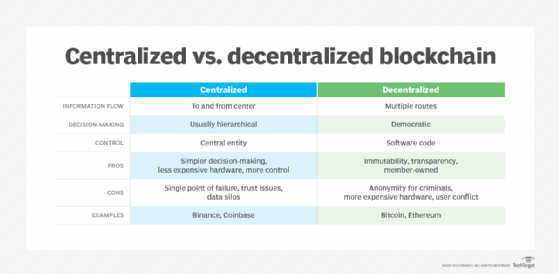
Each entry on the blockchain is called a “block.” These blocks are linked together to form a “chain.” Once a block is added to the chain, it cannot be altered or deleted without changing every subsequent block, making the entire chain highly secure. Blockchain is often described as “immutable,” meaning the data cannot be modified once it’s recorded.
Many blockchain networks operate as public databases, meaning anyone with an internet connection can view a list of the network’s transaction history. Although users can access transaction details, they cannot access identifying information about the users making those transactions. It is a common misperception that blockchain networks like Bitcoin are fully anonymous; they are actually pseudonymous because there is a viewable address that can be associated with a user if the information gets out.
Some see DAGs as an alternative that combats the shortcomings of blockchain technology, but it would be false to claim that one technology is better than the other. In the world of cryptocurrency, people often try to build hype around the technology they invested in. This leads to the creation of buzzwords like “blockchain killer,” meant to portray DAGs as technologically superior to blockchain.







