
















All cryptocurrencies
The appeal of non-government currencies, such as a crypto currency, is that they are separated from the control of and the reliance upon the backing of a centralized authority https://xiaomidroneturkiye.com/. However, this disintermediation also removes the theoretical stability provided to a currency by a governmental authority and the backing of that currency by the actual economy of a nation state. Without this backing, cryptocurrencies do not, and should not be expected to, trade in the traditionally more stable manner of fiat currencies.
Forks can also lead to uncertainty. When a blockchain splits into two versions, investors may hesitate, unsure of which version will gain traction. Bitcoin Cash, created from a bitcoin fork in 2017, saw initial volatility before stabilizing. Upcoming upgrades, like the Chang Hard Fork expected in 2024, are predicted to spark bullish trends based on historical patterns. These events demonstrate how technological changes can influence cryptocurrency prices both positively and negatively.
The market perception of a product, asset, or service is the amount of value an individual assigns to it. Although not the same concept as market value, it is closely related; the higher one’s market perception, the more one is willing to pay for it.
Research also highlights the predictive power of Google search trends. When search volumes for bitcoin increase, it often signals heightened public interest, which can lead to price movements. Positive news tends to boost investor confidence, while negative news amplifies fear, creating a cycle of market volatility.
All cryptocurrencies
Welcome to CoinMarketCap.com! This site was founded in May 2013 by Brandon Chez to provide up-to-date cryptocurrency prices, charts and data about the emerging cryptocurrency markets. Since then, the world of blockchain and cryptocurrency has grown exponentially and we are very proud to have grown with it. We take our data very seriously and we do not change our data to fit any narrative: we stand for accurately, timely and unbiased information.
Cryptocurrencies are digital assets that are secured by cryptography. They use decentralized networks to transfer and store value, and the transactions are recorded in a publicly distributed ledger known as the blockchain. Transactions are verified by network nodes and recorded in a public distributed ledger known as the blockchain. Cryptocurrency transactions are secure, and are verified by a decentralized network of computers.
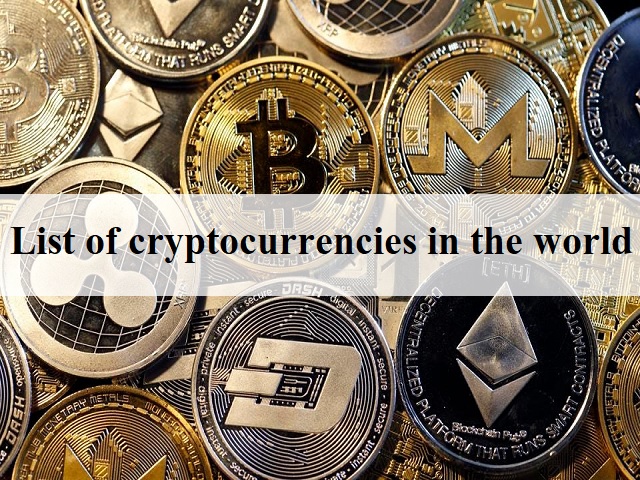
The very first cryptocurrency was Bitcoin. Since it is open source, it is possible for other people to use the majority of the code, make a few changes and then launch their own separate currency. Many people have done exactly this. Some of these coins are very similar to Bitcoin, with just one or two amended features (such as Litecoin), while others are very different, with varying models of security, issuance and governance. However, they all share the same moniker — every coin issued after Bitcoin is considered to be an altcoin.
Welcome to CoinMarketCap.com! This site was founded in May 2013 by Brandon Chez to provide up-to-date cryptocurrency prices, charts and data about the emerging cryptocurrency markets. Since then, the world of blockchain and cryptocurrency has grown exponentially and we are very proud to have grown with it. We take our data very seriously and we do not change our data to fit any narrative: we stand for accurately, timely and unbiased information.
Cryptocurrencies are digital assets that are secured by cryptography. They use decentralized networks to transfer and store value, and the transactions are recorded in a publicly distributed ledger known as the blockchain. Transactions are verified by network nodes and recorded in a public distributed ledger known as the blockchain. Cryptocurrency transactions are secure, and are verified by a decentralized network of computers.
The very first cryptocurrency was Bitcoin. Since it is open source, it is possible for other people to use the majority of the code, make a few changes and then launch their own separate currency. Many people have done exactly this. Some of these coins are very similar to Bitcoin, with just one or two amended features (such as Litecoin), while others are very different, with varying models of security, issuance and governance. However, they all share the same moniker — every coin issued after Bitcoin is considered to be an altcoin.
Do all cryptocurrencies use blockchain
Blockchain technology achieves decentralized security and trust in several ways. To begin, new blocks are always stored linearly and chronologically. That is, they are always added to the “end” of the blockchain. After a block has been added to the end of the blockchain, previous blocks cannot be altered.
As we now know, blocks on Bitcoin’s blockchain store transactional data. Today, tens of thousands of other cryptocurrencies run on a blockchain. But it turns out that blockchain can be a reliable way to store other types of data as well.
When discussing crypto vs blockchain, it’s essential to understand the foundational elements of blockchain. Data is stored in “blocks,” which are cryptographically linked together. The system is decentralized, meaning no single entity has control. Instead, it’s a collective effort. The data is not just irreversible but also transparent, adding another layer of security.
Are all cryptocurrencies the same
Virtual currencies are unregulated digital currencies controlled by developers or a founding organization consisting of various stakeholders involved in the process. Virtual currencies can also be algorithmically controlled by a defined network protocol. An example of a virtual currency is a gaming network token whose economics is defined and controlled by developers.
Cryptocurrency has grown far beyond just Bitcoin. As the industry continues to evolve, there are now thousands of different digital assets serving different purposes. Some are designed for fast payments, while others offer access to decentralised services, private transactions, or even decision-making within a project.
The purpose for a given platform also plays a role in whether or not it is a true cryptocurrency. Take Ethereum, for example. The coin we normally refer to as Ethereum really isn’t Ethereum at all. Rather, it is simply Ether. There is actually a big difference between the two.
Money has been one of the key elements in how the world works. Imagine the chaos in society without a store of value and means to exchange products and services. The evolution of money has led it to the point where currency has turned digital. Most of you would have heard about digital currency and cryptocurrency quite frequently in discussions about finance and technology.
As mentioned earlier, digital currencies only exist in digital form. They do not have a physical equivalent. Digital currencies can be centralized or decentralized. Fiat currency, which exists in physical form, is a centralized system of production and distribution by a central bank and government agencies. Prominent cryptocurrencies, such as Bitcoin and Ethereum, are examples of decentralized digital currency systems.







